



Decisions about feeding your baby are determined by a combination of factors unique to each family and situation. One of the factors to consider when making your decision is the differences and similarities between human milk and formula milk.
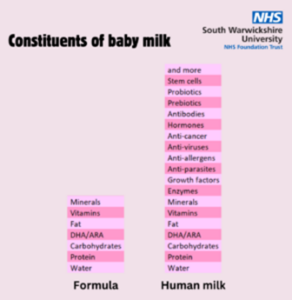
Breastmilk (human milk) is a living fluid. Your body is constantly assessing your baby’s needs and will change your milk in response. E.g.
Visit the human-milk website for more information on the constituents of human milk.
Formula is a nutritional substitute which is strictly regulated and standardised. It provides the basic nutrients needed, but it cannot change in response to your baby’s needs. E.g.
Visit the First Steps Nutrition website or the Infant Milk Association website for more information on infant formula.
Remember that feeding your baby doesn’t have to be all or nothing! You can combination (mixed) feed your baby, with both breast milk and formula.
Research shows that any amount of human milk (even 5ml a day) can share your immune system to help the baby fight off infections, as well as provide factors such as lactoferrin to help the baby digest the nutrients in formula milk. The more breast milk a baby receives, the greater the impact of these immune and metabolic factors.

Read recent news, service updates and helpful advice from Coventry Family Health and Lifestyle Team.